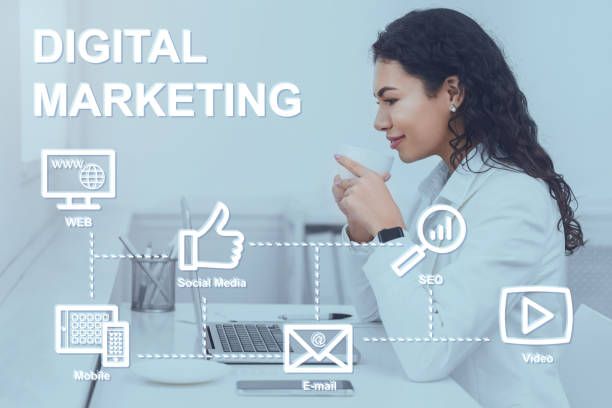
Digital marketing is the practice of promoting products, services, or brands through online channels such as search engines, social media platforms, email, websites, and mobile apps. It has become a core business function because customers now research, compare, and purchase in digital environments, often before speaking to a sales representative. Unlike traditional marketing, digital efforts can be measured in near real time, enabling businesses to understand what is working, what needs improvement, and how budgets should be allocated for better outcomes.
For businesses of any size, digital marketing can strengthen brand visibility, generate qualified leads, improve customer relationships, and drive revenue with a level of precision that was difficult to achieve in the past.
Digital Marketing Overview
Digital marketing is broader than posting on social media or running online ads. It includes a structured set of activities such as market research, audience segmentation, content creation, search engine optimization, paid acquisition, marketing automation, conversion rate optimization, and analytics. What makes digital marketing especially relevant today is consumer behavior. That is why businesses increasingly invest in localized strategies as well, including digital marketing in Vadodara when they need to reach audiences in specific cities or regions. A well-planned digital approach positions a business wherever customers are searching, scrolling, or asking questions, and ensures the brand is presented clearly, professionally, and persuasively.
Websites and Landing Pages
A website is often the central hub of a digital marketing ecosystem. While social platforms and ads create awareness, the website is where customers validate credibility and take action, such as requesting a quote, booking a consultation, purchasing a product, or subscribing to updates. When built as part of business growth strategies, strong websites are designed around user experience, clarity, and trust, not just aesthetics. Effective landing pages align message and design with the traffic source, whether it’s a search ad, a social campaign, or an email offer.
SEO for Visibility
Search engine optimization, or SEO, helps businesses appear in organic search results when customers look for products, services, or solutions. It is one of the most powerful long-term growth methods because it can generate steady traffic without paying for every click. SEO is built on technical health, high-quality content, and authority signals such as reputable backlinks and strong user engagement.
Local SEO is equally important for service-based businesses. Over time, SEO strengthens trust because customers often perceive top organic results as more credible, especially when supported by helpful content and clear proof of expertise.
Content Marketing Benefits
Content marketing involves creating useful resources, blogs, guides, videos, case studies, infographics, webinars, and more to educate and influence potential buyers. Instead of pushing sales messages immediately, content earns attention by answering questions, solving problems, and explaining options.
It strengthens SEO by targeting relevant search queries, it fuels social media with shareable ideas, and it improves lead quality because informed prospects are more likely to convert.
Social Media Marketing
Social media marketing helps businesses build brand presence, reach targeted audiences, and create two-way communication with customers. It is not only about posting frequently. It is about maintaining consistency, delivering value, and shaping perception. Businesses can use social platforms to share educational content, demonstrate product use, highlight customer stories, and communicate brand values.
Customers often ask questions in comments or direct messages and expect quick, helpful responses. The way a brand communicates publicly can influence trust far beyond the individual conversation.
Paid Advertising
Paid digital advertising includes search ads, ads, video ads, social media ads, and shopping campaigns. The key advantage is speed and control. Businesses can launch campaigns quickly, target audiences by location, interests, demographics, and intent, and scale results based on performance. However, paid advertising works best when combined with strong fundamentals. If a landing page is unclear or slow, ad costs rise, and conversions fall. Smart businesses run structured tests on creatives, offers, and targeting while monitoring metrics like cost per lead, return on ad spend, and conversion rate.
Email and Automation
Email marketing remains one of the highest-return channels because it enables direct communication with people who have already shown interest. Businesses use email to nurture leads, share educational content, offer product updates, promote seasonal deals, and encourage repeat purchases.
Unlike social algorithms, email provides greater control over timing, messaging, and segmentation, allowing brands to tailor campaigns based on customer behavior. Automation makes email even more effective by delivering the right message at the right moment.
Local and Regional Growth
Digital marketing is not only global. It is highly effective for local growth when campaigns are designed around regional behavior and needs. Businesses can target specific cities, neighborhoods, and service areas through SEO, location-based ads, and regionally relevant content. This is particularly valuable for service providers, retailers, clinics, and professional firms that rely on customers in a defined geographic radius. In many markets, brands that tailor messaging to local preferences create stronger engagement and better conversion rates.
Analytics and ROI
Measurability is one of the biggest advantages of digital marketing. Businesses can track how many people saw an ad, clicked a link, visited a page, filled a form, or completed a purchase. With analytics tools, performance can be evaluated across channels to understand which campaigns drive results and which require adjustment. This enables smarter budgeting because resources can be moved toward the highest-performing efforts.
The blog shares business and technology insights to help companies grow efficiently, and readers can view the articles to see how digital tools and workflows enhance productivity and decision-making.
Conclusion
Digital marketing is a strategic system that helps businesses attract attention, earn trust, generate leads, and convert customers through digital channels. It includes SEO, content marketing, social media, paid advertising, email automation, and analytics, each playing a distinct role in building growth.
For businesses aiming to compete in modern markets, digital marketing is no longer optional. It is a foundational capability. When companies align strategy with customer needs, invest in high-quality experiences, and continuously optimize using data, digital marketing becomes a reliable driver of brand authority, customer loyalty, and long-term revenue.